sheet 07 · start to finish
TradePass
Escrow for online trade between strangers: the money moves when the goods do.
- Year
- 2026
- Role
- Lead Engineer
- Status
- Building
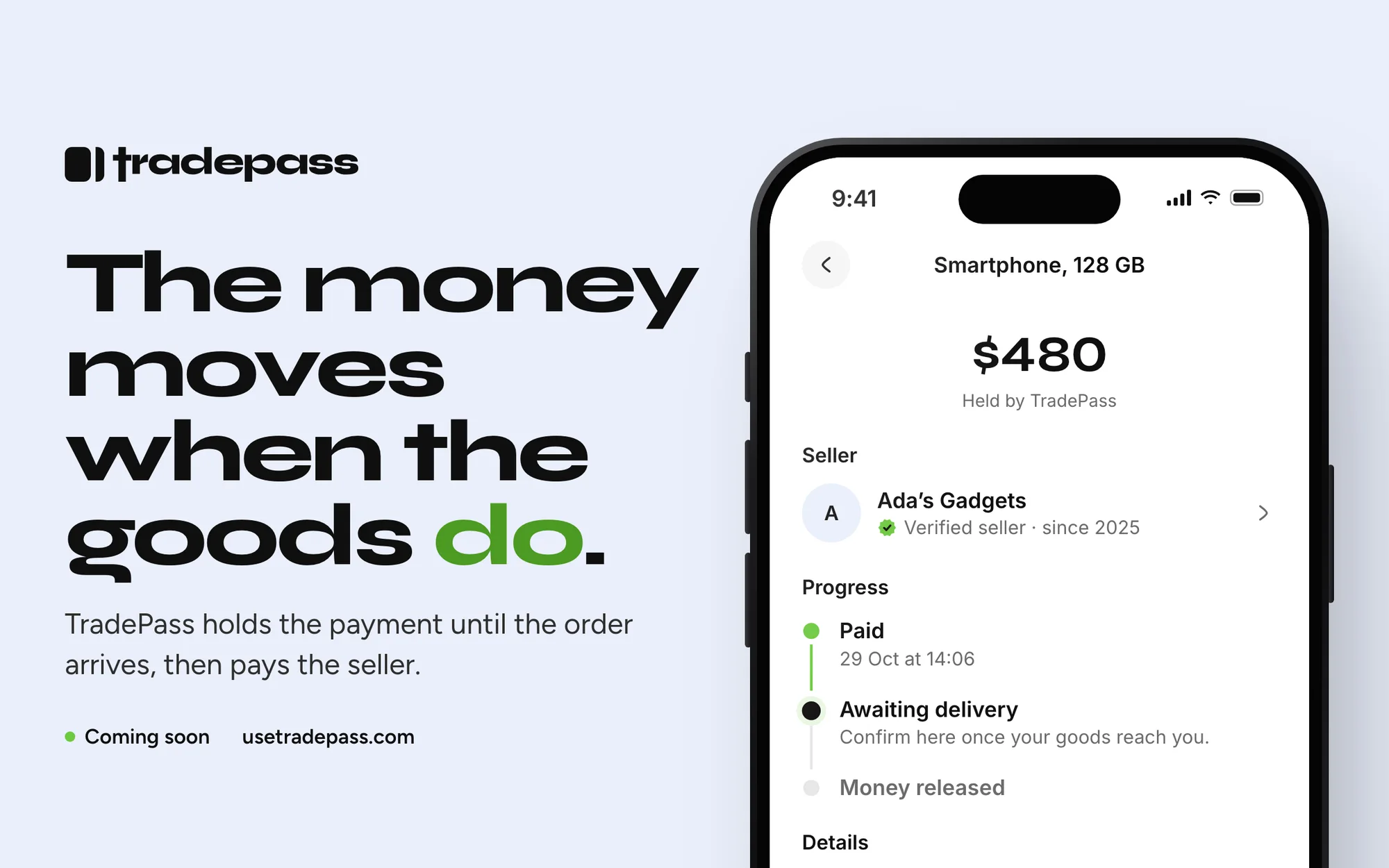
The path
6 stops01new trade 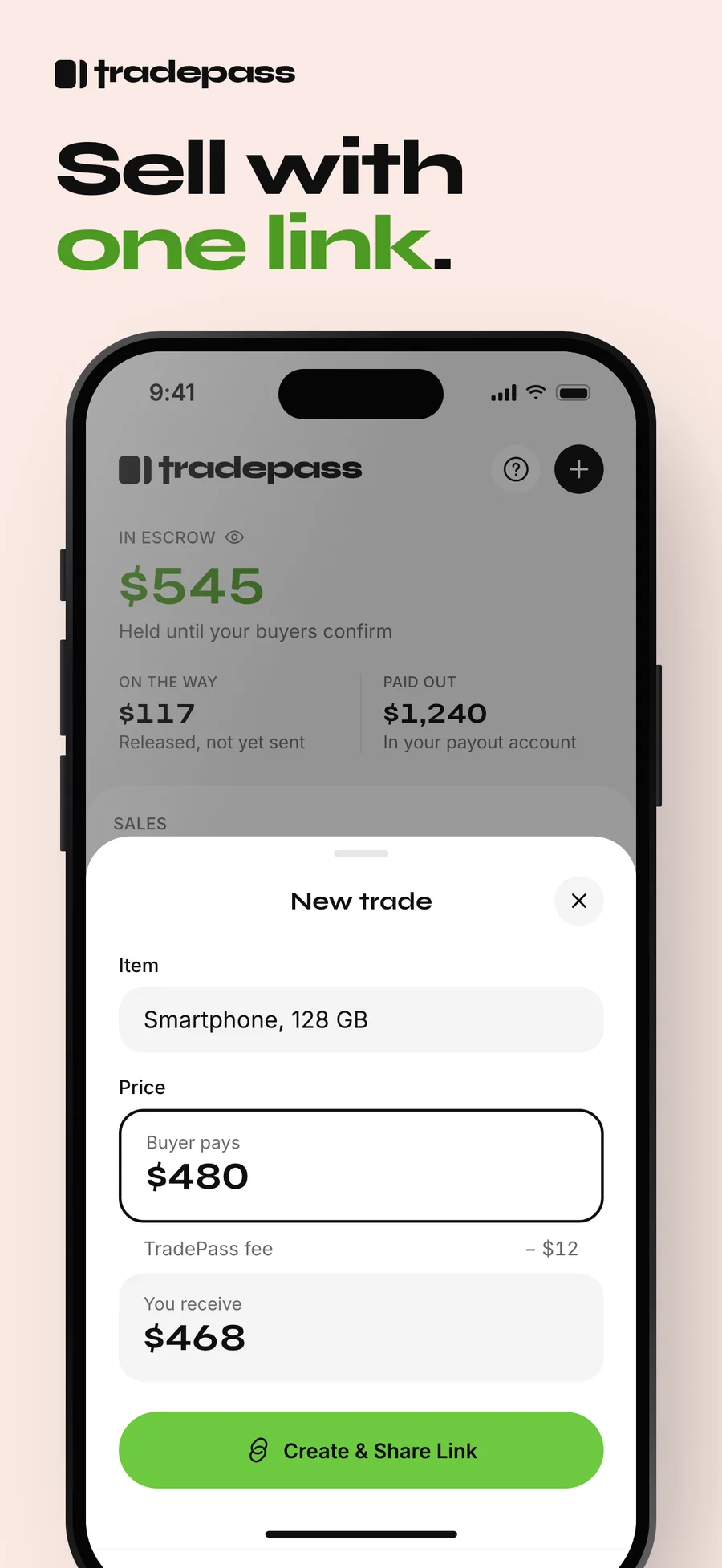
the seller names the item and price, sees the fee come off, and gets one link to share
02paid 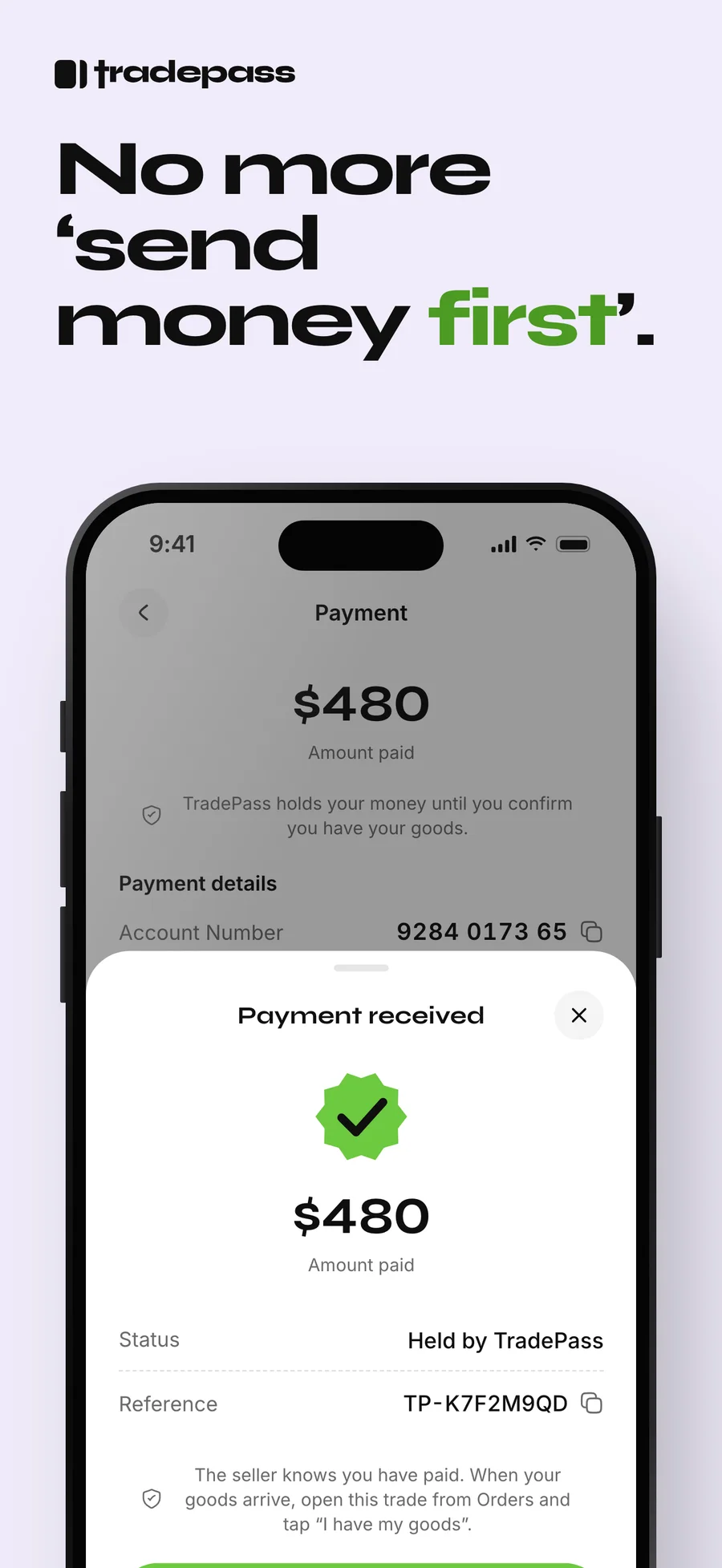
the buyer pays into an account opened for that one payment, and the money is held, not sent
03in transit 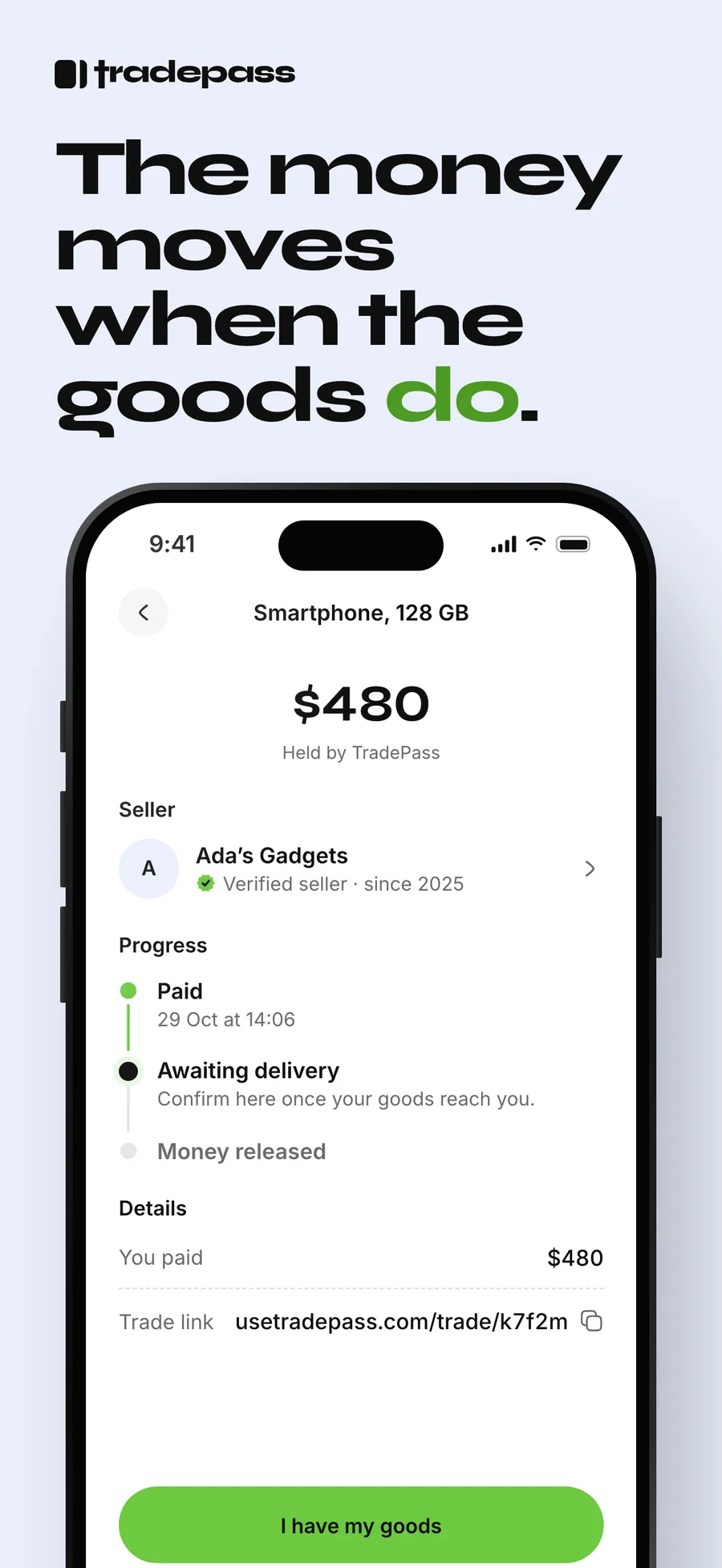
the buyer's view while the goods travel, with the seller's standing and the release still theirs to give
04release 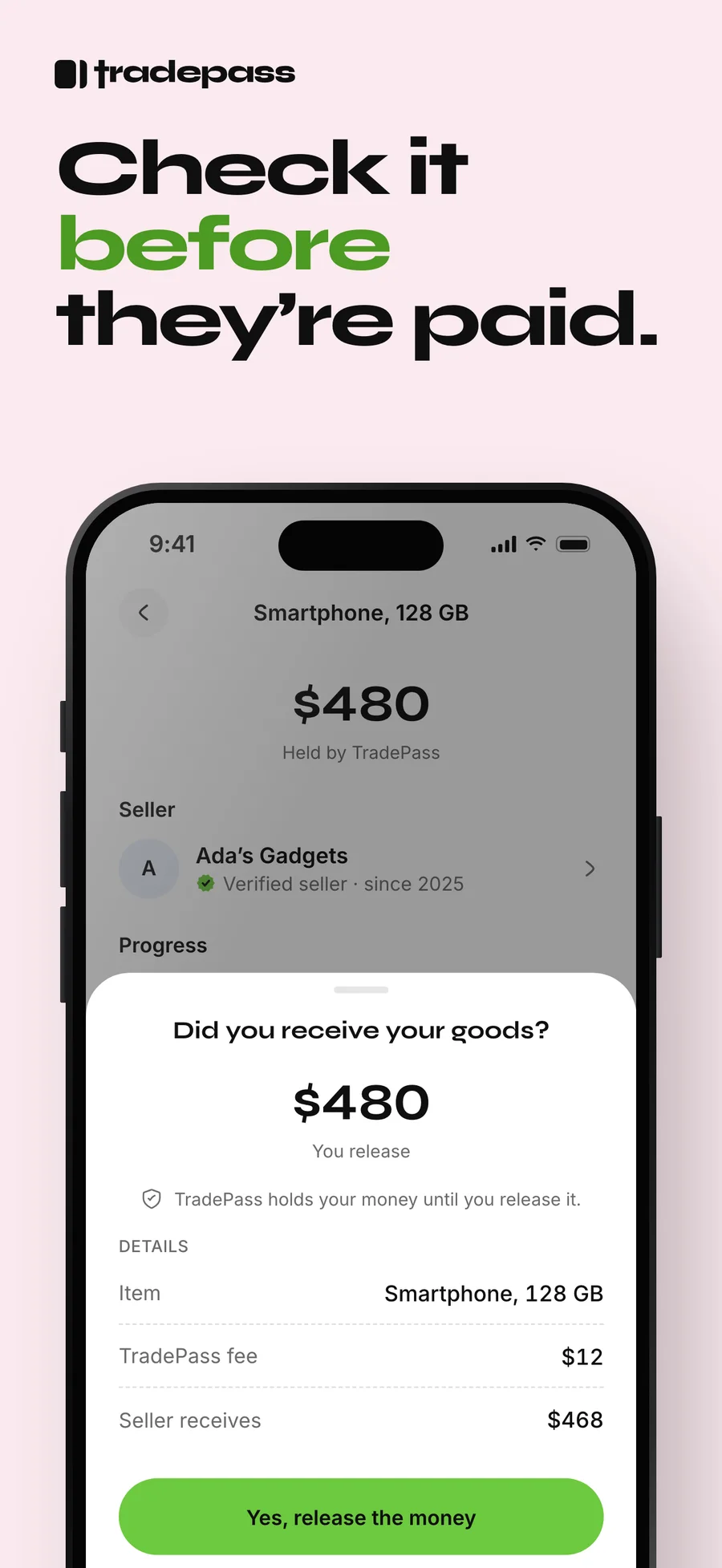
the buyer confirms the goods arrived, and the seller is paid the price less the fee
05seller home 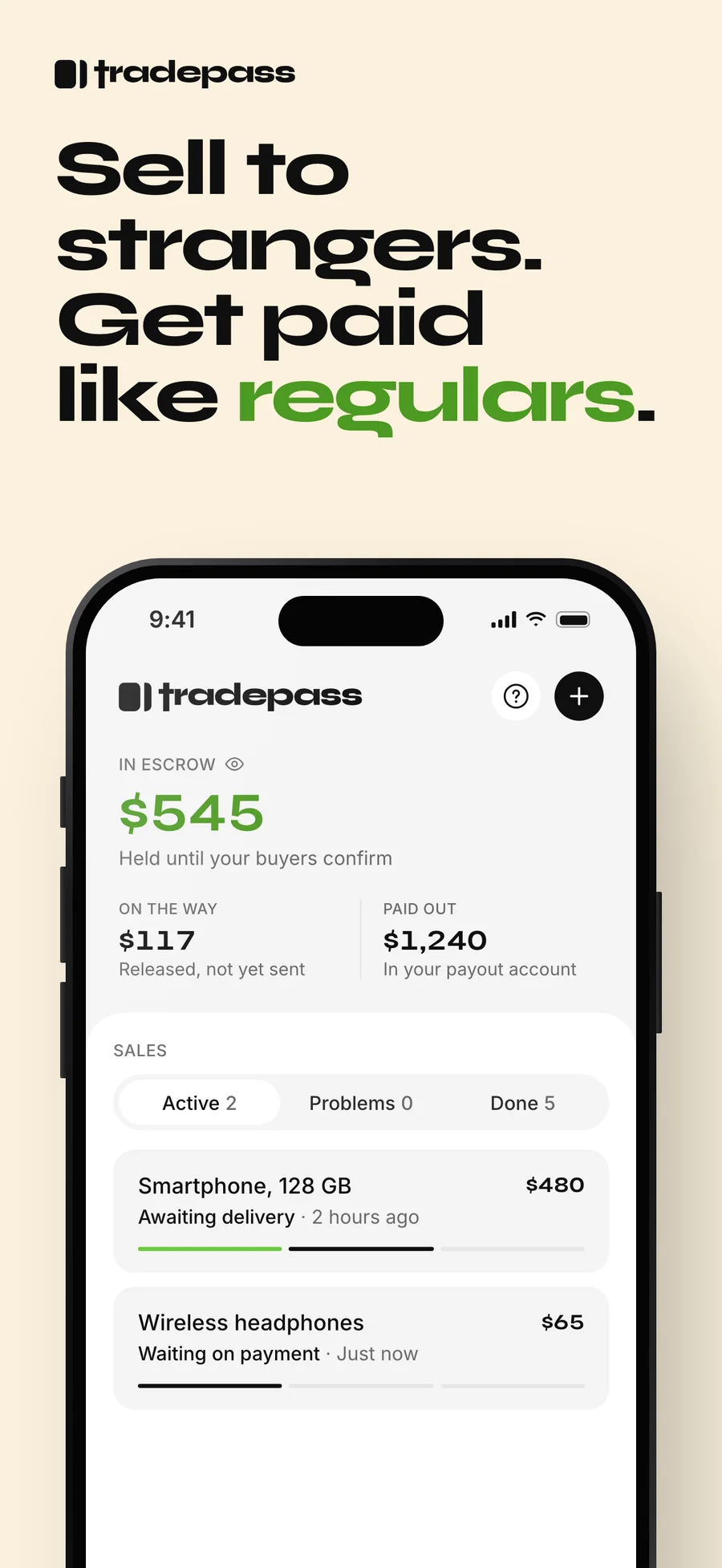
money held, on the way and paid out, with sales split into active, problems and done
06market 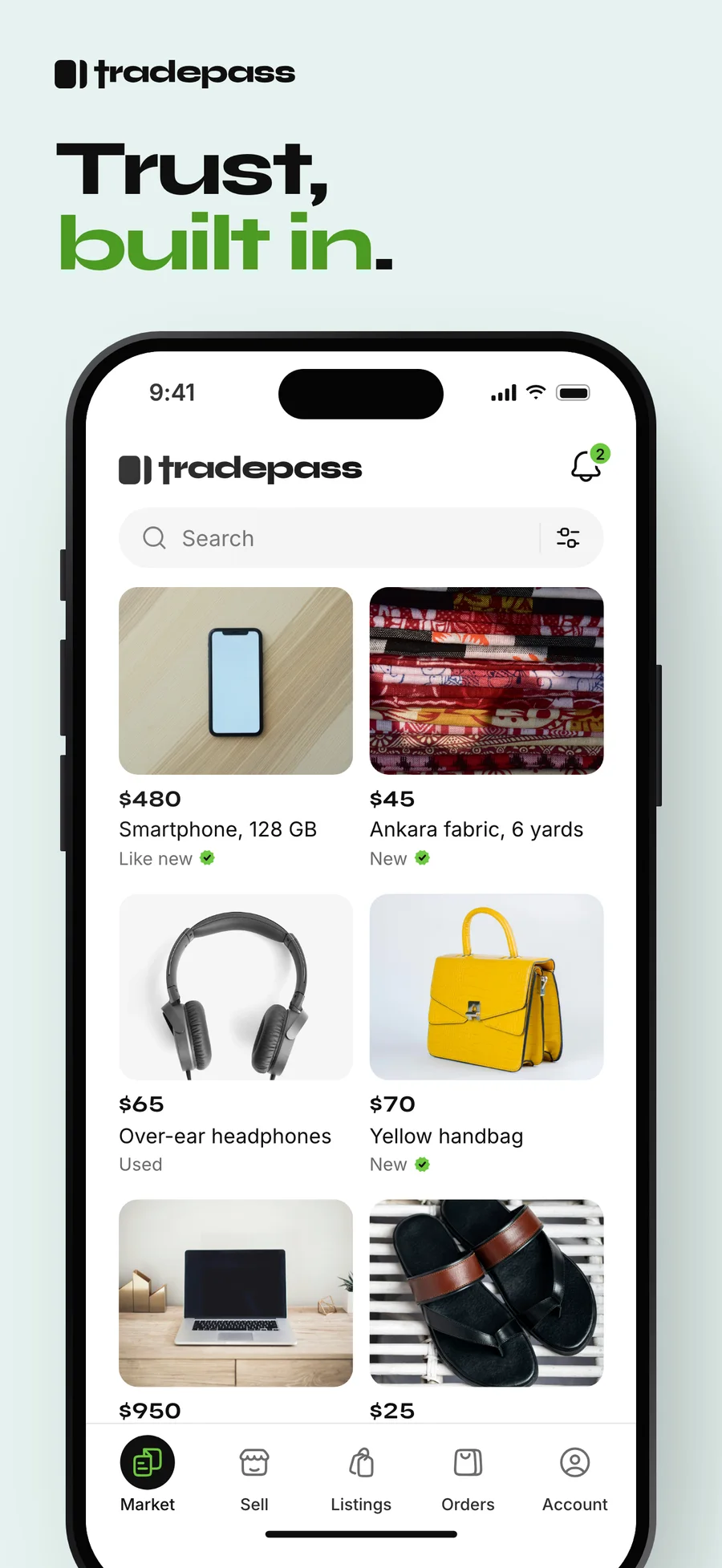
listings a buyer can browse and buy, each one through the same held payment
Overview
Escrow for the trade that happens in DMs. A seller shares one link, the buyer pays into an account TradePass controls, and the money only reaches the seller once the goods arrive, with disputes, refunds and returns for when they don't. One engineer across the Expo app, the web buyer flow, the staff console and the API. Money between strangers runs over payment providers whose webhooks arrive late, twice or never, so every step that moves money has to be safe to retry and impossible to race.
React Native · Expo · Next.js 16 · Express 5 · Supabase · TypeScript
Architecture, and why
7 rulesThe app knows no payment provider
Screens render the fields and instructions the API returns. A new country is a database row and a new rail is one adapter, with no screen change and no app release.
Only the provider can mark a trade paid
Amount, fee and status are never trusted from the client. A trade turns paid on a signed webhook or the server's own check with the provider; polling is only a hint to the UI.
Thirteen states, one transition table
Every trade moves through an explicit state machine, so a late payment still lands and a failed refund falls back to a dispute rather than pretending the money moved.
Money as integers, fees per market
Kobo, pesewas and cents stay integers from the database to the screen, and each country carries its own rate, floor and cap, so a seller can type the price or the payout they want.
One contract for four surfaces
The app, the web flow, the console and the API share one package of types, money helpers and error codes, so every response has the same shape and the same failure names.
Notices from cheapest to dearest
Push first, then WhatsApp, then SMS, behind one channel interface. WhatsApp is read more readily than a text here, and costs less.
A demo mode that can't lie
Fixture data is opt-in and badged on screen, never a fallback, because a build that quietly invented a payment confirmation would break the one rule.
Hard parts
A bank account per payment
Dedicated accounts needed each buyer's BVN and capped out at a thousand, so every checkout opens its own transfer account that refuses the wrong amount.
Webhooks that never come
A reconciler asks the provider about recent unpaid trades every five minutes, and the buyer is told exactly once, whichever path lands first.
Never refunding twice
A provider error is read as unknown, not failed, so the trade holds at refund-pending instead of sending the same money a second time.
One claim before money moves
A staff verdict and the hourly sweep could both settle a returned item. Now both must claim the return first, and the one irreversible step runs after it.
A typeface for money
The display face had no naira or cedi sign and no tabular figures, and NativeWind can't ask for them on native, so prices are set in a derived cut that has both.
A runtime bug that ate awaits
On the new Hermes, an async function with a default parameter lost every awaited value and every request failed. Traced, and fixed at the compiler.
Where it stands
- 115
- API endpoints behind the app, the web flow and the console
- 2,000+
- automated tests across the API, app and web
- 3
- markets wired, with Nigeria launching first
TradePass is client work in pre-launch. The site and production API are up and the app is headed for store submission; Ghana and Kenya are built and held back until Nigeria launches. This covers what's built rather than an outcome.