Kelechi Okeke · sheet 022024–Now
Sophia Editor
The AI editor behind the world's largest blockchain encyclopedia.
Frontend Engineer, IQ.Wiki/Next.js 15 · PlateJS · AI SDK v5 · GraphQL
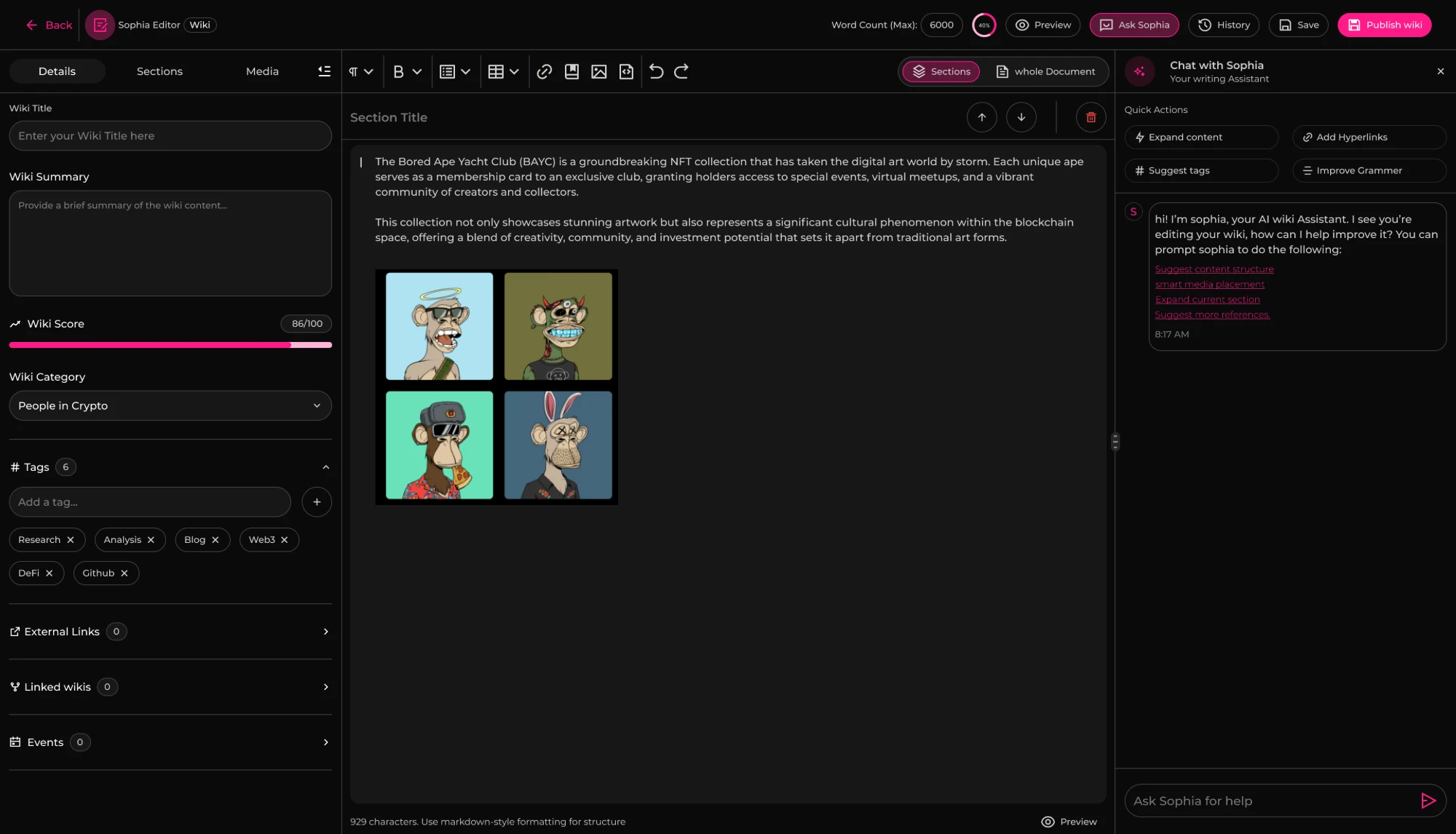
Two tool-calling agents draft and edit encyclopedia articles inside a PlateJS editor, under human review. AI hallucinates prose, structure and citations alike, so the hard part was never generation. It was building an editing surface where every agent action can be trusted, verified and reversed, at hundreds of wikis a week.
Architecture, and why
Two agents, twelve specialized tools
Generating a wiki and editing one are different jobs, so each agent gets its own focused toolset on a shared tracing base.
Markdown-first, section-based editing
Articles chunk into heading-delimited sections, so editor and agent both work on a bounded slice and the model's context stays small.
Diffs the AI can't hallucinate
A JSON diff computes what changed and the model only phrases it. It never gets to decide.
Progress streamed over SSE
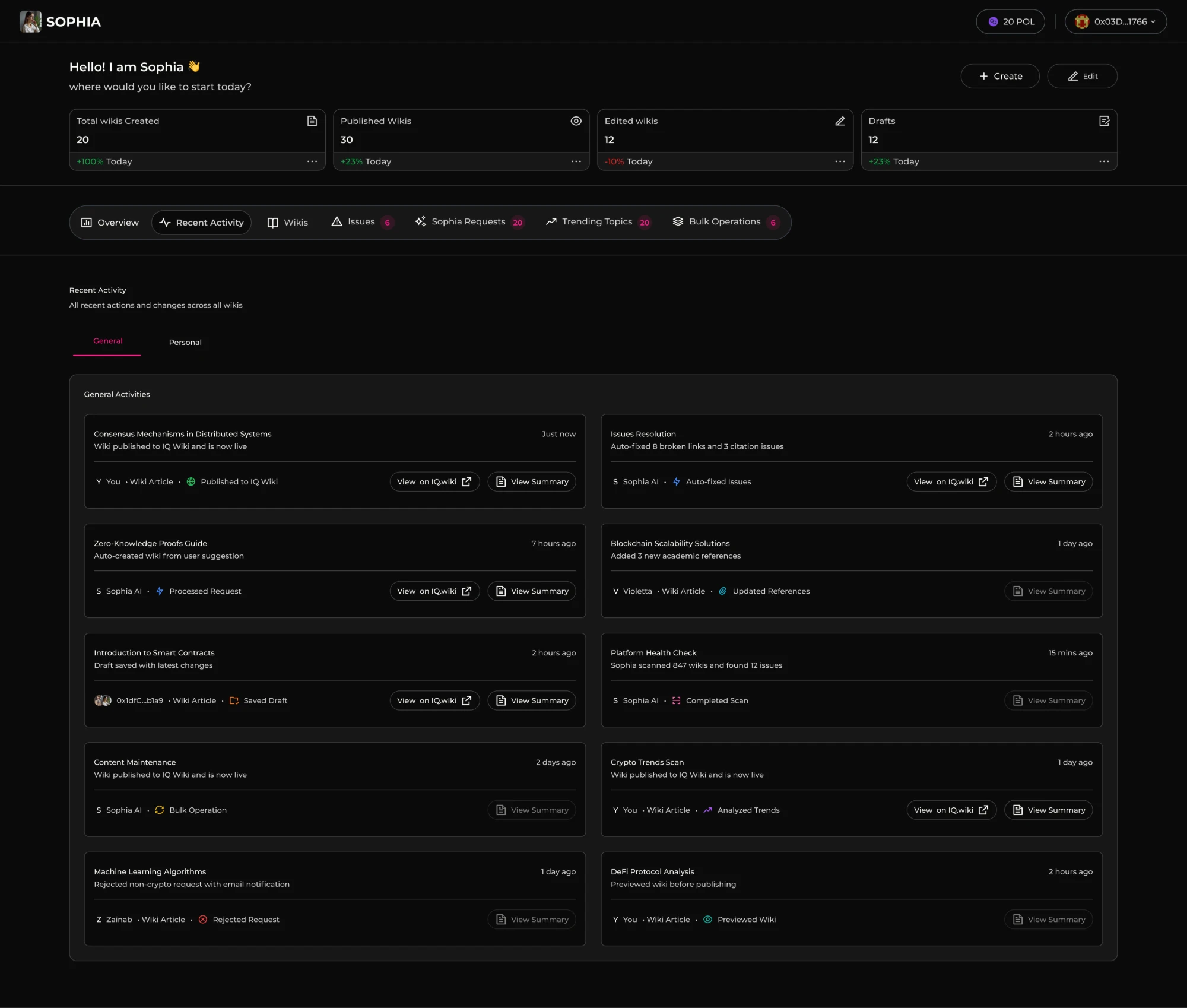
Tool calls, outputs and publishes stream to the client, so a five-minute agent run feels alive instead of frozen.
Every run fully traced
Each generation, tool call and LLM span is traced behind a swappable interface, so misbehaviour is replayable.
Engineering highlights
Publishing that ends on-chain
A publish pins to IPFS, signs an EIP-712 message and commits on-chain, with the human operator attributed.
A citation pipeline, not citation hopes
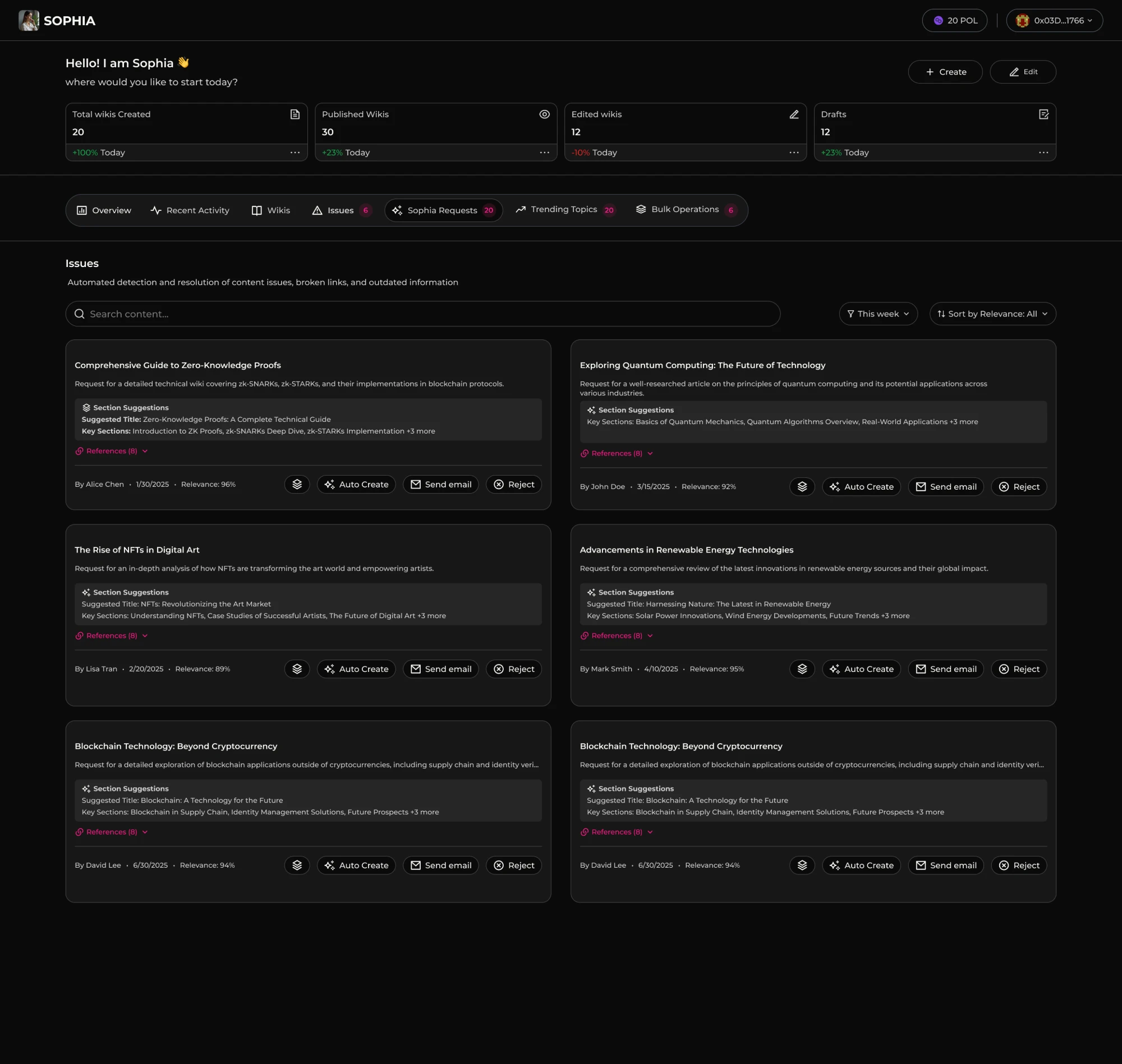
Inline citations are extracted, deduped and normalized into stable numbered references, punctuation included.
Version history rebuilt from chat
Every AI edit carries a snapshot, so a drawer rebuilds V1 to Vn with restore. Undo for agent actions.
An editor that fails safe
Malformed pasted content, Word tables to invisible Unicode, hits a recovery boundary instead of a white screen.
Editorial ops, not just editing
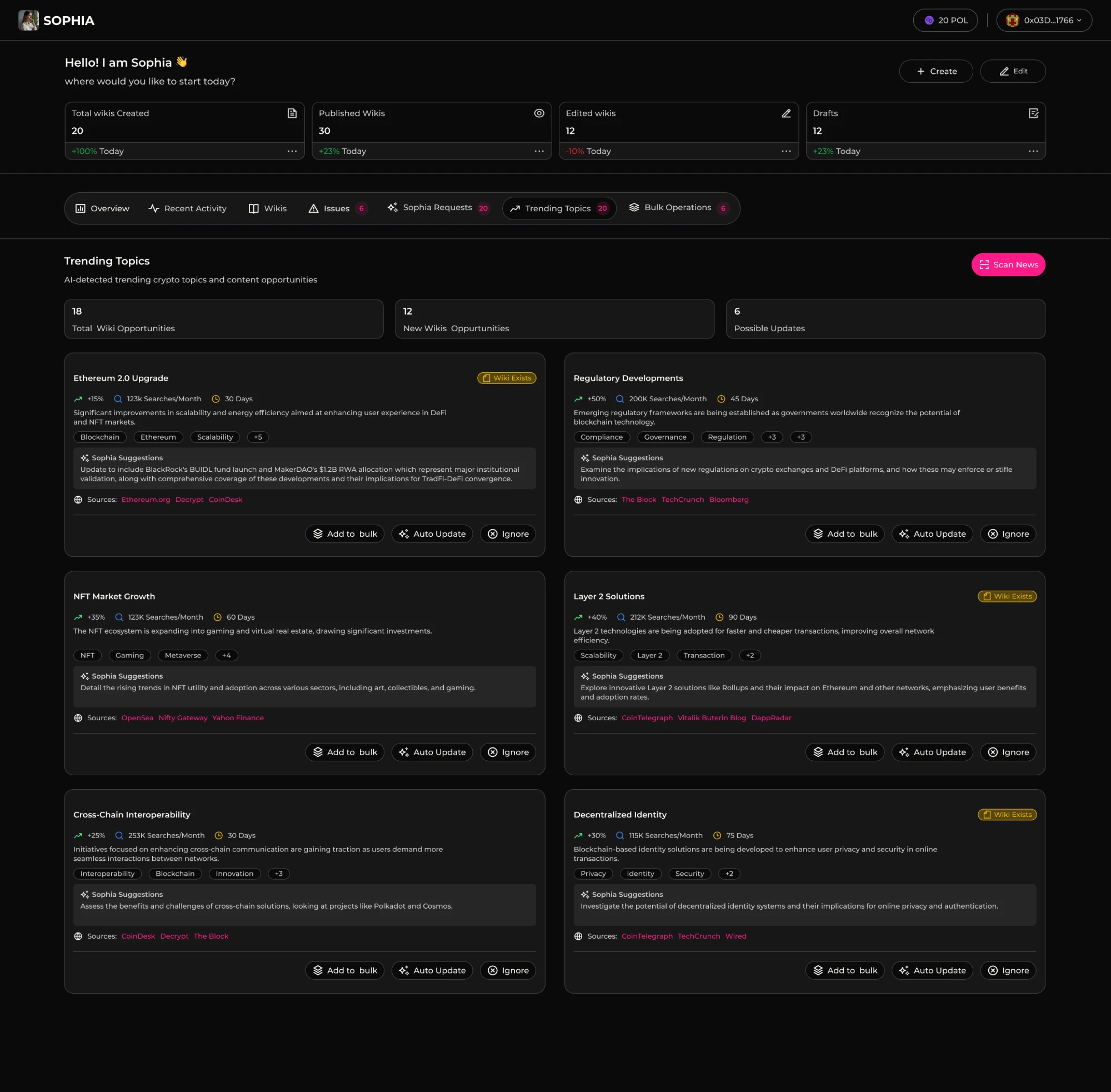
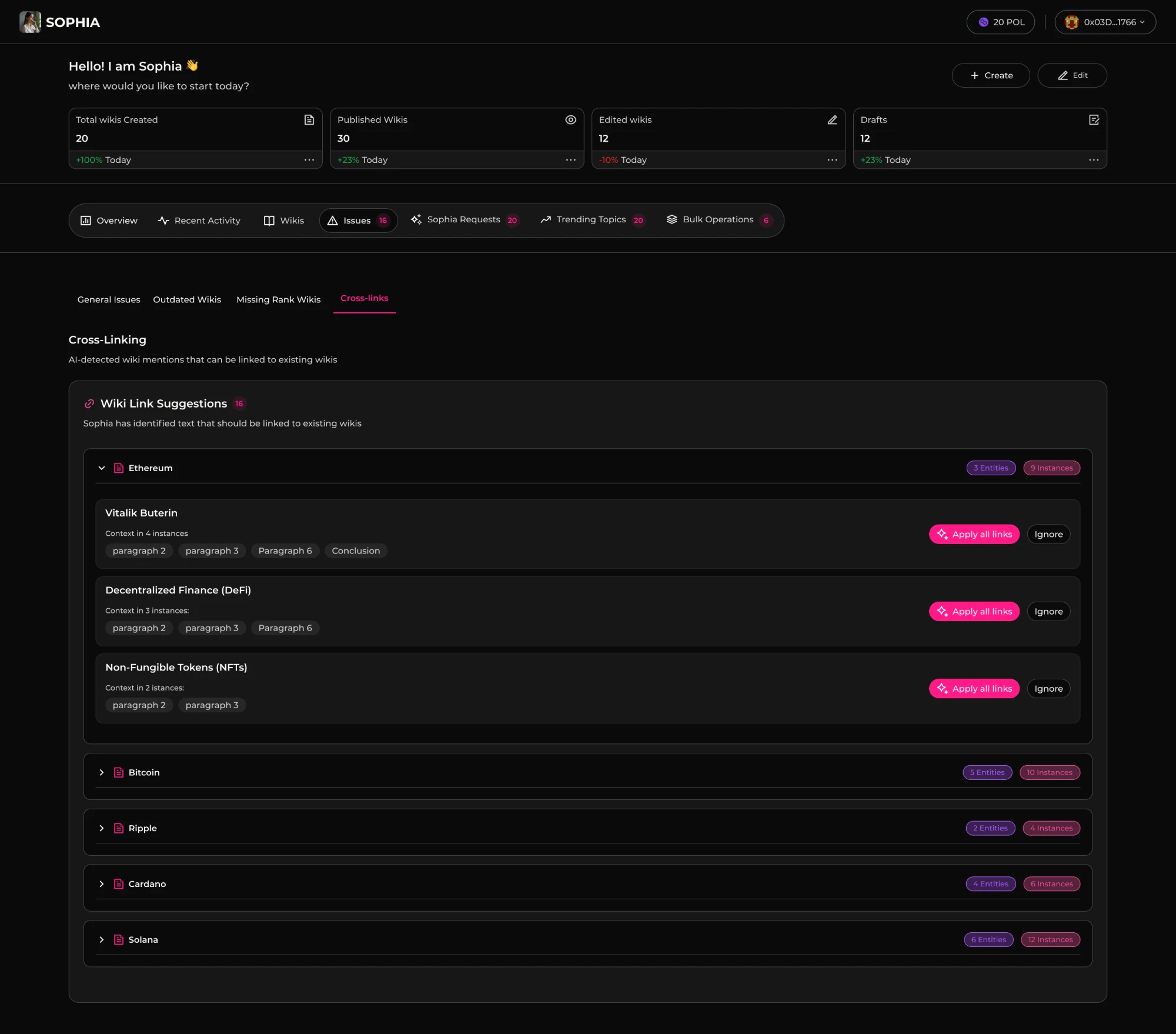
Queued bulk operations run across many wikis, while automated surfaces flag outdated articles and missing cross-links.
An autonomous trend scout
A third agent reads RSS feeds and decides which trending topics deserve a wiki. Humans approve the output.
Impact
- 300%+
- increase in weekly wiki output
- 68k
- lines of TypeScript across the platform
- 12
- specialized agent tools behind the editor